
Wine with Pasta dishes
When choosing wine for pasta, it’s best to match the weight and character of the sauce with the style of wine. Lighter seafood or vegetable pasta dishes shine with crisp whites such as Pinot Grigio, Sauvignon Blanc, or Vermentino. Tomato-based sauces are complemented by medium-bodied reds like Chianti, Barbera, or Montepulciano, which balance the acidity of the tomatoes. For richer, creamy, or cheesy sauces, a full-bodied white such as Chardonnay or a smooth red like Pinot Noir works beautifully. Earthier pasta dishes, for example those with mushrooms or truffle, can pair equally well with Sangiovese or even a soft Merlot.
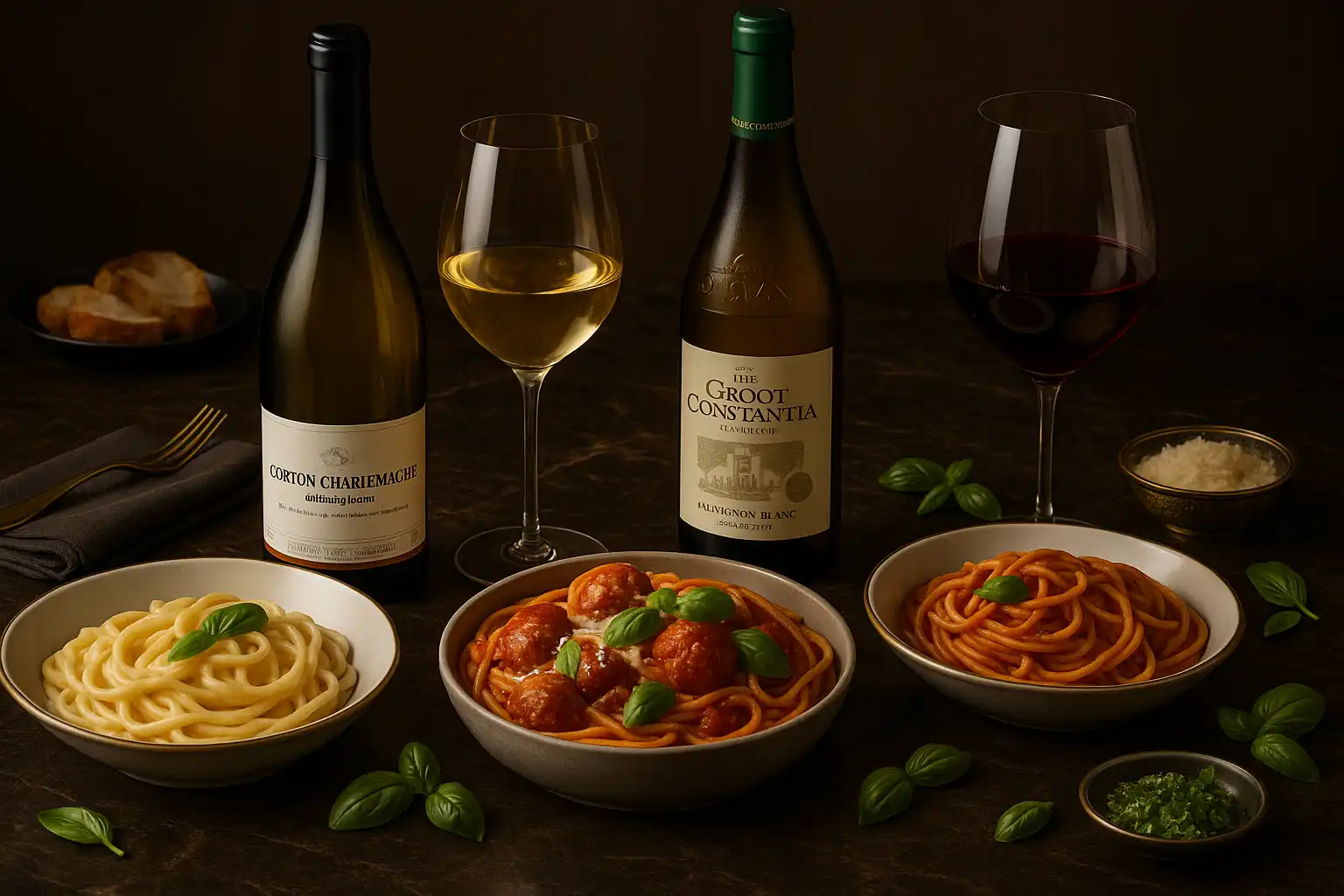
Pasta comes in a variety of guises, literally hundreds of different shapes and sizes, with the same dizzying array of recipes to pair with them, often incorporating a myriad of different flavours - pasta is the canvas to deliver these flavours. Each region of Italy has it's own pasta shape, with some sources listing more than 600, from the smallest Tempestine [a type of pasta known as Pastina, used to add to soups or cook in broth], to the largest Caccavela, whose giant shells are so big that there're usually served as a single portion! Pasta can be filled or stuffed like Cannelloni, Ravioli and Tortellini, layered like lasagne, or used to carry the sauce with Long Pasta like Tagliatelle, Linguine and Spaghetti, or Short Pasta like Penne, Fusilli and Rigatoni. And not forgetting dumpling-like Gnocchi, which is considered to be a type of pasta.
Pasta can also be fresh or dried, and infused with different ingredients which, for example, will give you a red pasta from tomatoes, green from spinach, beige from chestnuts and black from squid ink.
Remember about matching the weight of the dish to that of the wine, so in general, lighter pasta dishes are best with light to medium-bodied wines and full-bodied ones go better with more robust sauces. You don’t really need a complex wine with pasta dishes, a fruity, rustic wine is often a good accompaniment.
Remember that you can choose to match your wines in a congruent way, which feature similar flavours to the dish, or a contrasting one with different flavour components.
If in doubt choose an Italian wine, after all the country is synonymous with pasta. So look at regional pasta and wine pairings and match your wine accordingly, you won’t go far wrong and will be spoilt for choice - remember that adage - “What grows together goes together”!
Pasta with Tomato Sauces
Many classic pasta dishes like Lasagne, Pasta Amatriciana, Spaghetti with meatballs, Spaghetti Bolognese and other meat Ragùs are tomato based, and because tomatoes are high in acidity they benefit from a high acid wine to pair with them. In general, red wines with refreshing acidity work better here - for meatless tomato pasta dishes, like the classic Pasta Pomodoro and Pasta alla Norma, try a Montepulciano d’Abruzzo, Pinot Noir, Valpolicella, Barbera, Frappato, young Chianti or other Sangiovese-based wines. With richer and more hearty meaty tomato recipes you need a wine with enough gusto to stand up to the intense flavours and robust characteristics of the dish - try a Primitivo from Puglia, or Californian Zinfandel.
The high tannins in Aglianico from Basilicata or Campania, Argentinian Malbec Wine or Cabernet Sauvignon will complement the richness of the dish and work well with the fat and protein content of the meat. For an unusual choice that will get your guests talking, offer a Lagrein or Teroldego, and if you're celebrating and want to push the boat out, try a Brunello di Montalcino from Tuscany or a Barolo, that “iron fist in a velvet glove” wine from Piedmont - these full-bodied, high acid wines are an excellent match with robust, meaty tomato dishes.
For lighter tomato and seafood tomato based recipes like Marinara, you can opt for high acid, crisp whites - Sauvignon Blanc, Grillo, Verdicchio, Pecorino, Picpoul, Albariño or dry Rieslings are all good choices.
Pasta with Ceamy Sauces
White wines work well with the velvety textures of delectably creamy sauces like Carbonara and Alfredo. Fresh white wines with good acidity will cleanse the palate and cut through and balance the richness of the sauce - try a crisp Riesling, Pinot Grigio, Soave from Italy’s Veneto, Orvieto or Grechetto from Umbria or Frascati - Carbonara originates from Rome! For something different, try a Fiano from Campania in the South of Italy or Sicily's answer to Riesling - Carricante!
Sparkling wines may seem an unconventional choice, but their bight acidity cuts through the richness of cream - try a Franciacorta from Lombardy, or one of the many Proseccos from the Veneto, and you can go Brut [6-12 grams residual sugar] or Extra Dry [12-17 grams residual sugar] depending on your personal taste.
For lighter dishes an un-oaked Chardonnay is a good bet, especially Chablis for seafood creamy pastas. But for heavier recipes, more full-bodied, buttery Chardonnays will match the weight and richness of the dish, as do Chenin Blancs and Viogniers.
Lemony creamy sauces are good with zesty, citrussy wines like Pinto Grigio, Pecorino, Verdicchio Verdejo, Vermentino, Albariño or Vinho Verde. For an unusual choice try an Ansonica, or a blend using this unusual Italian grape.
If you prefer a red, steer clear of high tannin wines and opt for Chianti, Barbera, Beaujolias or Pinot Noir instead - check out the Pinot Neros - this is what the Italians call Pinot Noir.
Pasta with Cheese Sauces
With cheese pasta dishes white wines are generally the best option. These gooey dishes are deeply satisfying but the wine pairing depends on the cheese - some cheeses are rich and others are milder.
Remember that you can choose to either contrast the flavour and texture of the sauce with the profile of the wine, or harmonise with it. For example, crisp whites with bright acidity like Sauvignon Blanc and Riesling will provide a contrast by cutting through the creaminess of the dish, and are good with lighter cheese pastas - for something different try a Ribolla Gialla from Italy's Friuli-Venezia-Giulia region, or neighbouring Slovenia. On the other hand rich white wines compliment rich cheese sauces, and weightier, buttery full-bodied Chardonnays will harmonise with them, as the buttery characteristics of the sauce are echoed in the wine and match the weight of the dish.
As with creamy pasta sauces, Italian sparkling wines are also a good option with cheesy pastas as the creamy texture of cheese pairs well with the wine's acidity.
Simple, peppery Cacio e Pepe hails from Italy's Lazio region, so pair it with a fresh and crisp Frascati, the famous white wine produced in the hills south of Rome. Creamy Macaroni Cheese is also great with bright white wines like Trebbiano or dry Riesling.
If you do want a red choice, look to un-oaked, light-bodied fruity reds like Valpolicella, Pinot Noir, Barbera, Chianti and other Sangiovese based wines.
Salty, pungent blue cheese sauces can easily be overpowered by lighter wines, and high tannin wines can clash with the creamy texture and salty characteristics of the cheese. Gavi, and white Rhône blends are great for white choices and for something unusual try a Tocai Friulano from north-eastern Italy. For reds go for a fruit-driven Zinfandel - this generally has softer tannins than it's Italian counterpart Primitivo. A round and smooth plummy Merlot is also a good option if you favour reds.
Pasta with Herby Sauces
Pesto shines with the bright flavours of aromatic basil, pungent garlic and the rich nutty flavour of pine nuts. Although basil and pine nuts are the classic pesto ingredients, it can be made from many combinations of herbs and nuts, but the key characteristic is verdant! These pronounced flavours demand a congruent wine with equal punch - crisp and lively “green” and herbaceous wines like Grüner Veltliner, New Zealand Sauvignon Blanc, or England's answer to Sauvignon Blanc - Bacchus.
The original pesto recipe hails from Liguria, so try the wines from this area in Northwest Italy - Vermentino or the unusual Albarola. You could also try a Gavi, from Piedmont, made from the Cortese grape variety as this has herbal notes. Trebbiano features nuances of basil, Sicily's Catarratto has some herbal complexity and Piedmont's Arneis is tinged with grassy and herbal characteristics. Avoid oaky whites. Other good matches are dry Provençal or Italian rosés.
For a red choose one with herbal characteristics, like Cabernet Franc and Chilean Carménère.
The characteristic bitter finish of Dolcetto will marry well with herbs, and the Corsican Sciaccarellu displays herby, peppery notes. Barbera and Sangiovese also work well with herbs, especially oregano, rosemary and sage. The rare Rossese grape is Ligurian, so this would also be one to try with vibrant pesto pastas.
For sun-dried tomato pesto look to Sangiovese and Barbera again - or if you're feeling in a celebratory mood, you could try a Prosecco as its acidity will match the acidity in the tomatoes.
Pasta with Spicy Sauces
These dishes can pack a real punch. There is a lot of oomph in Arrabiata and the anchovy and caper laden Puttanesca which are heavy on the chilli, so more thought is needed here. If the dish is mildly spiced, a spicy Primitivo, Zinfandel Wine, Nero d'Avola, Negroamaro, Malbec or peppery Shiraz will pair well, and light fruity reds like Beaujolais also work well with spice. If there is chilli overload however, you need a fresh and crisp white to neutralise and balance the chilli heat, like Riesling, Verdejo, Albariño/Alvarinho, Vermentino, Gavi, Verdicchio, Trebbiano or Pinot Grigio - there are plenty from the north of Italy to choose from.
Aromatic white off-dry Rieslings and Gewürztraminers with just a hint of residual sugar balance the heat and contrast nicely with spice - but not too sweet wines, as these can overpower the flavours of the dish and unbalance it.
Piquant Puttanesca originates from Naples in the Campania region of Southern Italy, so opt for one of the distinctive white wines from this area with a Greco di Tufo, Falanghina and Fiano or the reds from Campania's eastern neighbour Puglia, with a Primitivo, Negroamaro or Nero di Troia.
The vibrant and fiery Arrabiata originates from Lazio, so try a white from this region - a Frascati, or the unusual Roscetto.
For something different, a sparkling red Lambrusco from Emilia-Romagna can fit the bill - these refreshing fruit-driven wines are low in tannin with spicy undertones.
If you're a rosé fan, these wines can also balance the heat - there are plenty of Italian rosés to sample, including some unusual Sicilian examples made from the Nerello Mascalese grape variety.
Remember that wines with high alcohol can make the taste of chilli seem hotter, intensifying the burn, so avoid high alcoholic wines - although some people do like this effect, they don't want to tame the fire of chilli and wines with a high ABV actually elevate the culinary experience for them. If you are one of these people and want to fuel the burn, then go all out with a high tannin Aglianico - don't say you haven't been warned!
Fish and Seafood Pasta Sauces
With fish and seafood pastas try crisp, light white wines with refreshing acidity, zesty citrus or saline [or a combination of the two] notes to mirror the brightness of the dish, like a Pinot Grigio, Picpoul, Verdicchio, Vermentino, Vernaccia, Albariño/Alvarinho or Frascati. For unusual choices, the Mantonico grape from Calabria in the toe of Italy and Nuragus from Sardinia are also good with seafood - these are sure to be talking points!
You could also try a wine from northern Italy's Trentino or Alto Adige regions, like Friulano or a Grechetto from Central Italy which has bright fruit and ripe citrus characteristics.
Clam laden Spaghetti alle Vongole - a favourite along the Amalfi coast, goes well with light-bodied Muscadet, Pinot Grigio, Verdicchio, Picpoul, Falanghina and Greco di Tufo.
Pasta con Bottarga is a dish where cured fish roe, usually from grey mullet or tuna, is grated over the pasta. Bottarga has a strong salty, umami-rich flavour and requires acidity to balance the brininess, so high acid white wines are the go-to. The dish is popular in Sardinia and Sicily so try the Sardinian Vermentino or Sicilian Catarratto. Orange wines have a reputation for a good choice to pair with “difficult” foods - so if you're feeling adventurous...
With fishy pasta dishes featuring tomatoes try a rosé. Provence of course has a huge range to choose from, but there are also some lovely Italian examples from all over the country, and for something a little different try one of the red fruit-driven wines from Etna. Or a rosé sparkling Italian wine - and not just Prosecco either, there are some cracking examples from Puglia, Campania, Abruzzo, Trentino-Alto Adige and Lombardy to sample!
Luxurious salmon, scallop and lobster pasta dishes LOVE Chardonnay, and you can go for a Chablis with a lighter, lemony dish, or a rich and buttery oaked Old or New World version with a more indulgent creamier one. Viognier, Chenin Blanc and White Rhône blends are also good options.
The strong, briny flavours of squid or cuttlefish ink pastas can be difficult to pair with wine. Whites with crisp acidity are the best choice, so look to Pinot Grigio, Sauvignon Blanc or Sicilian whites like Grillo. If you do prefer a red choice try a light, fruity Valpolicella, Barbera, Pinot Noir, Grenache or Beaujolais. Remember what I said about Orange Wines and “Difficult” foods - well the enterprising amongst you could opt to try one of these; there are examples from Georgia, Australia, France, Austria, South Africa, Greece and even one from Sicily! This unique, eye-catching dish is also a winner with the effervescence of white sparkling wines, which provide a lovely pairing with a refreshing acidity that balances the richness of the dish. Go Italian with a Brut Prosecco or Franciacorta, and if it's a special occasion - bring on the Champagne!
Vegetable Pastas
Primavera, made with vibrant spring vegetables pairs well with equally vibrant high acid, crisp, lemony and minerally whites with floral nuances. Albariño/Alvarinho, Verdicchio, Grüner Veltliner, Vermentino and unoaked Chardonnays all mirror the freshness of the dish and enhance the flavours of the vegetables. Greco di Tufo and dry Rieslings are also good with light vegetable pastas.
Crisp and delicate Provençal rosés, with their citrussy and herbal characteristics are also a good option.
Chardonnay and White Côte-du-Rhônes are the answer to creamy vegetable pastas.
For reds look to fruity light to medium-bodied wines like Valpolicella, Barbera, Chianti, Beaujolais for lighter vegetable pasta dishes.
Merlot, Bonarda and Grenache pair well with the richer flavours of roasted vegetable pastas, and if aubergine is involved look to Nero d'Avola.
For pasta dishes involving rich and earthy pumpkin, like Pumpkin Ravioli or Pumpkin Lasagne, choose Viognier, Chenin Blanc, Pinot Gris or a richer buttery style of Chardonnay. Nero d'Avola or a red Côte-du-Rhône if you prefer a red.
With earthy, umami-rich mushroom pastas, it's Pinot Noir or Chianti as both will harmonise well with the flavour profile of the fungi, as will an oaky Chardonnay.
Truffles are a fungi, but they're technically not a mushroom because they grow underground. The allure of rich and earthy truffles are hard to resist - whether the pasta is truffle-infused, or they are shaved over the top of the dish.
There are many types of truffle, but in the world of gastronomy we tend to think of them in terms of colour; black and white.
Look to the countries you most often associate with truffles for your wine pairings.
The country usually associated with white truffles is Italy, and the Alba region of Piedmont is where you will find the most expensive truffles in the world. Umbria is also famous for its truffles.
Refined and velvety white truffles, with their subtle nuttiness and hint of garlic are good with full-bodied white wines. Judiciously oaked Chardonnays are a great choice, or for something different try a Timorasso as this hails from Piedmont. For reds, the red wines from Northern Italy with their earthy characteristics compliment the pungency of white truffles, so it's Barolo, Barbaresco and Barbera.
The country most associated with black truffles is France, were Périgord truffle [known as “Black Diamonds”] from Nouvelle-Aquitaine are highly prized, and Burgundy is also famous for its truffles.
Black truffles have a more robust earthy flavour than white. The earthy characteristics of Pinot Noir match beautifully with the savoury flavour of black truffles - red Burgundies with their tertiary mushroomy and sous bois nuances would be a divine pairing. There are plenty of other wines with earthy profiles to try too, like Sangiovese, Nebbiolo, Bordeaux blends, Mourvèdre and Carignan. For an unusual choice, the savoury and earthy notes of the Umbrian speciality Sagrantino is a great match.
Creamy truffle dishes are fantastic with Champagne and other dry sparkling bottle fermented wines like Franciacorta - their acidity is a great foil for the earthiness of truffles, and the yeasty notes of these wines compliment them too.
Whatever colour you choose, these luxurious and flavourful fungi are sure to bring a touch of luxury to your Tartufo pasta dish!
Gnocchi
These soft, pillowy potato dumplings are generally considered to be a subcategory of pasta, and can be cooked in a variety of ways.
In general, Chardonnay Pinot Grigio, Fiano, Sauvignon Blanc or Riesling are good options. For a red choice try a Dolcetto or a Pinot Noir from the New World, which are more fruit-driven and less earthy than their Old World counterparts.
Classic aromatic and earthy gnocchi in a sage and rich butter sauce needs a wine that matches the richness of the dish like a Viognier or full-bodied oaked Chardonnay. If you prefer a red, try other low tannin wines. Apart from Pinot Noir, Dolcetto and Barbera you can take your pick from Sangiovese, Nerello Mascalese, Frappato, Valpolicella and Gamay - the Beaujolais grape.
For gnocchi in tomato, pesto, vegetable or cheesy sauces, look under the headings dedicated to these dishes above to make your choice, and you will see that there are plenty of options to pair with these decadent, little light and fluffy mouthfuls!
Other Popular Guides
Popular Questions About Wine and Pasta Pairings
What wine goes with pasta?
The best wine for pasta depends on the sauce. Tomato-based dishes pair well with Chianti or Barbera, while creamy sauces work beautifully with Chardonnay or Viognier.
Is white wine good for pasta?
Yes, white wine is excellent with creamy or seafood-based pasta. Try Sauvignon Blanc, Chardonnay, or Vermentino for a crisp and balanced pairing.
What is the best wine with spaghetti and meat sauce?
A bold red like Montepulciano d’Abruzzo, Zinfandel, or Chianti Classico complements the richness of spaghetti and meat sauce.
What wine goes with carbonara?
Pinot Grigio, Gavi, or Chenin Blanc pair well with carbonara — they cut through the richness while enhancing the flavour of the dish.